


In Germany, trade fairs run like clockwork — until you violate a fire code, mishandle visitor data, or discover your booth structure lacks engineering approval. Then, time stops and panic sets in.
Despite the anxiety they may cause, however, German exhibition regulations aren’t designed to make exhibitors miserable. They’re meant to keep some of the world’s largest and most influential trade fairs safe, fair, and remarkably efficient.
And Germany takes all of it seriously.
From fire-resistant booth materials to GDPR compliance to strict exhibitor contracts, the regulatory landscape is dense enough to trip up even seasoned international exhibitors.
Here’s what you need to know to exhibit in Germany without breaking the rules.
Why Germany Takes Trade Fair Regulations So Seriously
German trade fairs aren’t viewed as temporary marketing events. They’re seen as regulated marketplaces with real economic importance.
As such an important legal foundation for German trade fairs is §69 of the Industrial Code (Gewerbeordnung), which gives officially recognized fairs special “market privileges.” These privileges allow certain exceptions to normal business restrictions.
The philosophy behind the system is simple: Trade fairs should reflect the market as completely and fairly as possible.
That’s why German law emphasizes broad exhibitor access rights. Trade fairs are intended to function as a “mirror of the market,” ensuring relevant market participants can participate and compete fairly.
In other words, Germany doesn’t treat trade fairs casually. They’re considered a vital part of its serious business infrastructure.
The Rules That Can Shut Down Your Booth
When it comes to German safety standards, close doesn’t count. Here are some rules that can trip you up — and shut you down.
Fire Safety Is Non-Negotiable
If your booth can catch fire easily, it probably won’t make it onto the show floor.
German venues typically require compliance with Brandschutz Norm B1, meaning booth materials must be difficult to ignite. And stand builders should be able to provide proper safety certificates confirming compliance.
Plus, if your exhibit includes open flames of any kind, you’ll generally need:
- A fire extinguisher
- A fire blanket
- Additional safety precautions depending on the venue
Flammable materials and open flames are some of the fastest ways to attract unwanted attention from venue inspectors.
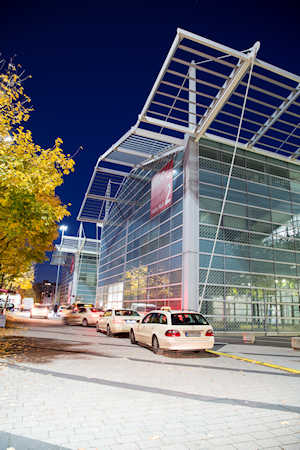
Messe München is a sleek, sustainability-forward venue with one of the world’s largest photovoltaic rooftop systems sitting atop several exhibition halls – ©Messe München GmbH
Tall Booths Require Engineering Approval
For booth structures taller than 3 meters (9.8 feet), organizers often require a Statikprüfung — a structural stability check performed by a qualified company before the fair begins.
This includes:
- Structural calculations
- Stability verification
- Safety checks for elevated elements
Even lighting installations can trigger safety requirements. Fixtures mounted overhead may require both safety rings and secondary safety cables to prevent falling hazards.
Construction Safety Matters
German move-in halls can feel less like convention centers and more like highly organized construction zones. As such, worker-safety requirements are taken seriously during setup and teardown periods.
Common requirements include:
- Steel-toe work boots
- Construction helmets
- Properly inspected power tools
In addition, the DGUV (German Social Accident Insurance) establishes safety guidelines for exhibition-stand construction. Compliance is not optional.
Electrical Work Must Be Done Properly
“Good enough” wiring is not an accepted engineering philosophy in Germany. Electrical installations generally must be performed by qualified electricians and comply with VDE (Verband der Elektrotechnik Elektronik Informationstechnik e.V.) regulations. Organizers and venues may also conduct inspections to ensure installations meet safety standards.
That means:
- No improvised wiring
- No questionable adapters
- No DIY electrical shortcuts
Your Exhibitor Contract Has Teeth
Exhibitors are responsible for ensuring their booth design, construction, products, and services comply with:
- German statutory regulations
- Venue technical requirements
- The organizer’s Terms of Business
And organizers reserve the right to intervene. They may:
- Reject booth designs they consider inappropriate or insufficient
- Require exhibitors to remove products
- Prohibit services that violate registration terms
- Shut down elements that pose safety risks or disrupt neighboring exhibitors
While they don’t pertain to health and safety standards, the following four rules apply to exhibitors at most German trade fairs.
1. Shared Booths Have Rules
Stand spaces are typically assigned to a single exhibitor. Multiple companies may only share a stand as part of a clearly identified joint presentation, and all represented companies must be disclosed.
2. Retail Sales Are Usually Restricted
Direct retail sales to visitors are generally not permitted at German trade fairs. So if your strategy involves operating like a pop-up retail store, you may want to revisit the rulebook first.
3. A Simple Badge Scan Could Be a Major Compliance Problem
In Europe, lead collection isn’t just marketing. It’s regulated data processing. So exhibitors collecting personal information at German trade fairs must comply with strict data-protection requirements under GDPR and German privacy law (BDSG).
That includes:
- Obtaining clear consent
- Handling personal data securely
- Demonstrating compliance if challenged
And yes, the fines for noncompliance can be substantial.
Interestingly, business cards handed over at trade fairs may constitute valid GDPR consent for follow-up communication — but only if the surrounding circumstances make that consent reasonably provable. In other words, context matters.
4. Visa Rules Have Changed
Germany has simplified certain visa procedures for trade fair exhibitors. Since summer 2013:
- Invitation letters from trade fair organizers are no longer required for trade fair visa applications
- Exhibitors no longer have to pay visa fees
However, exhibitors from many countries — particularly across Asia and Africa — still require visas to enter Germany for trade fairs. Countries specifically noted as major visa-required markets include:
- China
- Turkey
- India
- Pakistan
As always, paperwork moves more smoothly when handled early.
The Organizations Every Exhibitor Should Know
German trade fairs come with enough technical rules, legal requirements, and operational fine print to make your exhibitor manual feel like required reading for a law degree. Fortunately, several key organizations exist specifically to help exhibitors navigate everything from safety regulations and intellectual property to contracts, visas, and data protection. These are the names you’ll see repeatedly when planning a German exhibition — and the organizations worth knowing before something goes sideways on the show floor.
Organization:
AUMA (Association of the German Trade Fair Industry)
Why AUMA Matters: Central resource for exhibitor guidance, contracts, IP rights, visa information, and data-protection issues
DGUV (German Social Accident Insurance)
Why DGUV Matters: Establishes worker-safety and stand-construction regulations
DPMA (The German Patent and Trade Mark Office)
Why DPMA Matters: Handles trademark, design, and exhibition-priority protections
One final reality check: Technical requirements can vary from venue to venue. Rules at Messe Frankfurt may differ from those at Messe München or Messe Düsseldorf, so always review the organizer’s technical guidelines for the specific fair you’re attending.
Final Survival Checklist for International Exhibitors
German trade fairs reward preparation and punish improvisation. The exhibitors who thrive here aren’t necessarily the ones with the biggest booths or flashiest demos — they’re the ones who read the manuals, understand the rules, and handle the details before the forklifts start moving. Before you head to the Messe, run through this final checklist to make sure your exhibit doesn’t become a cautionary tale.
✔ Use certified flame-retardant booth materials
✔ Confirm whether your structure requires a Statikprüfung
✔ Hire qualified electricians for installations
✔ Ensure workers follow safety requirements during setup
✔ Read the exhibitor manual carefully
✔ Understand GDPR before collecting visitor data
✔ Review venue-specific technical guidelines early
✔ Never assume German trade fair rules are merely “suggestions”
Germany rewards exhibitors who prepare properly. The companies that succeed here aren’t necessarily the loudest or flashiest — they’re the most organized.
Don’t Go It Alone
Exhibiting in Germany comes with enormous opportunity — and an equally enormous amount of paperwork, technical requirements, and operational detail. One missed deadline, one noncompliant material, or one misunderstood venue rule can create problems that distract your team from the reason you’re there in the first place: building relationships and growing your business.
Idea International helps exhibitors stay ahead of the complexity. From navigating German venue requirements and coordinating local vendors to ensuring your exhibit aligns with safety standards and logistical realities, we help eliminate the friction behind the scenes so your team can focus on the experience in the booth. When every detail matters, having a partner who understands the German trade fair landscape can make all the difference. Reach out to us today.
Comments are closed.